LEGO Pyramid of Giza Instructions: A Comprehensive Guide
Embark on a brick-built journey! This guide details constructing the LEGO Pyramid, exploring techniques from basic layering to advanced SNOT methods, ensuring a stable, impressive display.

Welcome to the world of ancient wonders, recreated with LEGO bricks! This section introduces the captivating LEGO Pyramid of Giza, a challenging and rewarding build for LEGO enthusiasts of all skill levels. The LEGO sets aim to capture the majesty and historical significance of this iconic structure.
Building this model isn’t just about assembling plastic bricks; it’s about connecting with history and engineering. The LEGO Pyramid offers a unique blend of architectural recreation and playful construction. Prepare to delve into a project that demands patience, precision, and a touch of creativity. This guide will navigate you through each step, ensuring a successful and enjoyable building experience. Get ready to unlock the secrets of the pharaohs, one brick at a time!
Historical Context of the Great Pyramid
Journey back to ancient Egypt! The Great Pyramid of Giza, constructed as a tomb for Pharaoh Khufu over 4,500 years ago, stands as a testament to ancient Egyptian ingenuity and power. It was the tallest man-made structure for over 3,800 years, a remarkable feat of engineering achieved without modern tools.
Understanding its historical context enhances the LEGO building experience. The pyramid wasn’t simply a burial site; it was a complex religious structure, aligned with astronomical precision. Millions of stone blocks were meticulously placed, reflecting advanced mathematical and organizational skills. The LEGO model allows us to appreciate the scale and complexity of this ancient wonder, offering a tangible connection to a fascinating civilization and its enduring legacy.
LEGO Sets Featuring the Pyramid of Giza
Explore available LEGO sets! Currently, the primary LEGO set dedicated to the Pyramid of Giza is the LEGO Architecture 21058 Great Pyramid of Giza set. Released in 2022, this set offers a detailed cross-section view of the pyramid, revealing its inner chambers and passageways.
It includes 1,472 pieces and depicts the pyramid during its construction, showcasing the surrounding landscape and worker activities. While not a direct focus, elements of Egyptian themes appear in LEGO Pharaoh’s Quest and LEGO Adventurers sets, offering additional bricks for customization. Keep an eye on LEGO’s official website and fan communities for potential future releases or MOC (My Own Creation) instructions.
Availability and Release Dates
Track down your set! The LEGO Architecture 21058 Great Pyramid of Giza initially launched on August 1, 2022. Availability varied across retailers, including the official LEGO Stores, LEGO.com, Amazon, and other toy retailers.
As of today, December 17, 2025, the set remains generally available, though stock levels can fluctuate. It’s often found at a retail price of $139.99, but discounts may occur during promotional periods. Checking LEGO’s website and major retailers is recommended. Be aware of potential third-party sellers with inflated prices. Monitor LEGO fan forums for restock alerts and availability updates.
Set Numbers and Variations
Identify your build! The primary LEGO Pyramid of Giza set is designated as 21058 within the LEGO Architecture series. This is the core set containing the pyramid itself, along with depictions of surrounding structures and minifigures representing workers.
Currently, there aren’t significant official variations of this set. However, LEGO enthusiasts frequently create their own modifications (MOCs) – “My Own Creations” – expanding upon the original design. These aren’t official LEGO products but showcase the set’s building potential. Be mindful of potential counterfeit sets when purchasing online; always verify the set number and packaging authenticity.
Understanding the Building Process
A layered approach! Constructing the LEGO Pyramid of Giza involves a methodical, layered building process. The instructions guide you from a solid base, gradually adding layers of “stone” bricks to achieve the pyramid’s iconic shape. Expect repetitive steps, mirroring the actual construction of the ancient wonder.
The build emphasizes precision and alignment. Pay close attention to brick orientation, as even slight errors accumulate, impacting the final structure’s stability and appearance. Patience is key! The process isn’t rushed; it’s about carefully recreating a historical landmark with interlocking plastic bricks.
Inventory and Parts List
Comprehensive component check! Before commencing construction, meticulously verify all components against the official parts list included within the LEGO set’s instruction manual. The Pyramid of Giza set contains hundreds of uniquely shaped and colored bricks, demanding a thorough inventory.
Expect a variety of standard LEGO bricks, slopes, tiles, and specialized elements designed to replicate the pyramid’s textured exterior. Sorting pieces by type and color is highly recommended, streamlining the building process and preventing frustrating searches mid-construction. Missing pieces can be addressed through LEGO’s customer service, providing set details and part numbers.
Step-by-Step Building Instructions Overview
Decoding the manual! The LEGO Pyramid of Giza instructions are presented in a sequential, visually-guided format. Each step utilizes clear diagrams illustrating brick placement and connections. The build progresses logically, starting with the foundational layers and gradually ascending to the pyramid’s apex.

Pay close attention to color-coding and brick orientation; subtle details are crucial for structural integrity and aesthetic accuracy. The manual divides the construction into manageable phases – base, inner chambers, and exterior layering. Familiarize yourself with LEGO’s building conventions before starting, and don’t hesitate to revisit steps for clarification.
Base Construction and Foundation
Laying the groundwork! The pyramid’s foundation is paramount for stability. Begin with a robust baseplate, ensuring a level surface. Initial layers utilize larger, interlocking bricks to create a solid platform. Precise alignment is critical; any deviation will compound as you build upwards.
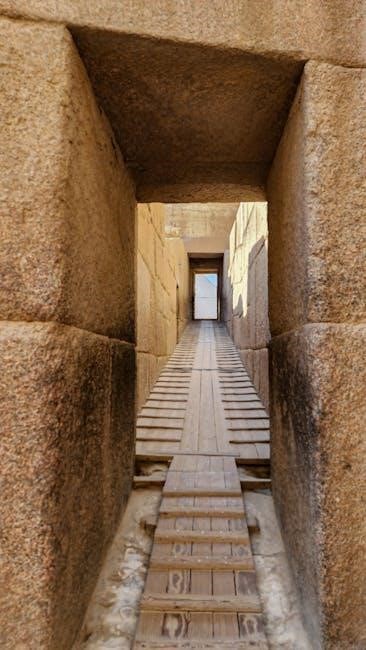
Focus on creating a square perimeter, meticulously checking angles. The foundation incorporates internal support structures, often utilizing Technic bricks for reinforcement. These hidden elements prevent shifting and maintain structural integrity. Regularly test the base’s stability by applying gentle pressure. A strong foundation guarantees a majestic, enduring LEGO Pyramid.
Inner Chamber and Passageways
Delving into the heart! Constructing the inner chamber and passageways requires precision and spatial awareness. Utilize smaller bricks and plates to create the confined spaces mirroring the real pyramid’s layout. Pay close attention to the angles of the descending and ascending passages, ensuring accurate representation.

Reinforce the chamber’s roof with Technic beams to prevent collapse. Incorporate details like false doors and alcoves to enhance realism. Consider using different colored bricks to distinguish passageways. Remember to leave access points for potential display features or minifigure exploration. A well-built interior adds depth and intrigue to your LEGO Pyramid.
Exterior Stone Layering Techniques
Achieving realistic texture! The exterior layering is crucial for replicating the pyramid’s iconic stepped appearance. Employ offset brick placement, slightly overlapping each layer to simulate the original stone blocks. Vary brick sizes and colors – light and dark grays – to introduce visual interest and mimic weathering.
Utilize plates and tiles to smooth transitions between layers. Consider incorporating SNOT techniques for angled surfaces, enhancing the pyramid’s slope. Regularly check for stability as you build upwards, ensuring each layer is securely attached. Patience is key; meticulous layering creates a stunning, authentic exterior.
Detailed Instruction Breakdown (Section 1)
Initiating the base structure! Section 1 focuses on assembling the initial four layers of the pyramid’s foundation. Begin by connecting large baseplates, ensuring a perfectly square perimeter. Next, construct the first layer using primarily 2×4 and 2×6 bricks in varying shades of gray.
Pay close attention to brick orientation; maintain consistent alignment for structural integrity. This section introduces basic layering techniques, emphasizing secure connections. Refer to the parts list frequently to verify component accuracy. Completing these initial layers establishes a solid base for subsequent construction, demanding precision and careful brick placement.
Detailed Instruction Breakdown (Section 2)
Refining the pyramid’s slope! Section 2 details layers five through eight, introducing subtle angling to begin forming the pyramid’s iconic shape. Utilize hinge bricks and slope pieces to achieve the desired incline, carefully offsetting each layer slightly inward.
This stage requires meticulous attention to detail, as even minor misalignments become increasingly noticeable. Focus on maintaining symmetry and consistent slope angles. The instructions highlight the importance of interlocking bricks to prevent shifting during construction. Regularly check for stability, reinforcing connections as needed. This section builds upon the foundation, establishing the pyramid’s defining form.
Detailed Instruction Breakdown (Section 3)
Approaching the apex! Section 3 focuses on layers nine through twelve, dramatically increasing the pyramid’s slope and nearing its peak. This phase introduces more complex SNOT (Studs Not On Top) techniques for smoother transitions and a more accurate representation of the original structure.
Pay close attention to the placement of smaller slope pieces to refine the pyramid’s angles. The instructions emphasize the use of Technic bricks for internal reinforcement, crucial for maintaining stability as the structure becomes taller. Regularly test the pyramid’s structural integrity, addressing any weak points immediately. This section demands precision and patience, culminating in the pyramid’s near completion.
Advanced Building Techniques Used
Mastering complex builds! Constructing the LEGO Pyramid of Giza necessitates several advanced LEGO techniques beyond simple brick stacking. SNOT (Studs Not On Top) is heavily utilized to achieve smooth, angled surfaces mimicking the real pyramid’s precise geometry. Offsetting bricks by half-stud increments creates subtle curves and refines the overall shape.
Angling techniques, employing hinge plates and specialized slope bricks, are vital for maintaining the pyramid’s iconic incline. Internal Technic brick reinforcement provides structural stability, counteracting the outward pressure. Careful layering and precise part alignment are paramount. These techniques demand patience and a keen eye for detail, resulting in a remarkably accurate LEGO replica.
SNOT (Studs Not On Top) Techniques
Revolutionizing surface aesthetics! SNOT, or Studs Not On Top, is crucial for the LEGO Pyramid’s realistic exterior. This technique involves building with bricks oriented sideways, exposing their side studs for connection points. Brackets and headlight bricks are essential components, allowing for perpendicular building directions.
Employing SNOT creates a smoother, less textured surface, accurately representing the polished limestone that once covered the Great Pyramid; It enables precise angling and detailing, vital for replicating the pyramid’s slopes. Mastering SNOT requires understanding stud orientation and utilizing specialized connector pieces. This advanced method elevates the build from basic stacking to a sophisticated architectural model.
Offsetting and Angling Bricks
Achieving the pyramid’s iconic slope! The LEGO Pyramid’s construction heavily relies on precisely offsetting and angling bricks. Simple stacking won’t suffice; subtle shifts are needed with each layer to create the inward-sloping walls. Plate assemblies and hinge plates become invaluable tools for achieving these angles.
Offsetting involves shifting bricks by fractions of a stud, creating a gradual incline. Angling utilizes specialized bricks or clever connections to alter the building direction. Careful planning is essential, as cumulative errors can lead to instability. Mastering these techniques ensures the pyramid’s structural integrity and visual accuracy, mirroring the ancient wonder’s majestic form.
Common Building Challenges and Solutions
Navigating construction hurdles! Building the LEGO Pyramid presents unique challenges. Stability issues are frequent, especially with the angled layers; reinforcing with internal supports and ensuring tight connections is crucial. Piece identification can be tricky with numerous similar-looking bricks – sorting by type beforehand saves time.
Instruction manual errors, though rare, may occur, requiring builders to rely on logical deduction and online resources. Missing or damaged pieces necessitate contacting LEGO customer service for replacements. Patience and a methodical approach are key. Utilizing online forums for shared solutions and building tips can also overcome obstacles, ensuring a successful build.
Dealing with Stability Issues
Maintaining structural integrity! The LEGO Pyramid’s angled design inherently challenges stability. Internal reinforcement is paramount; strategically placed bricks within the structure create a stronger core. Tight connections between layers are vital – ensure each brick is firmly pressed into place.
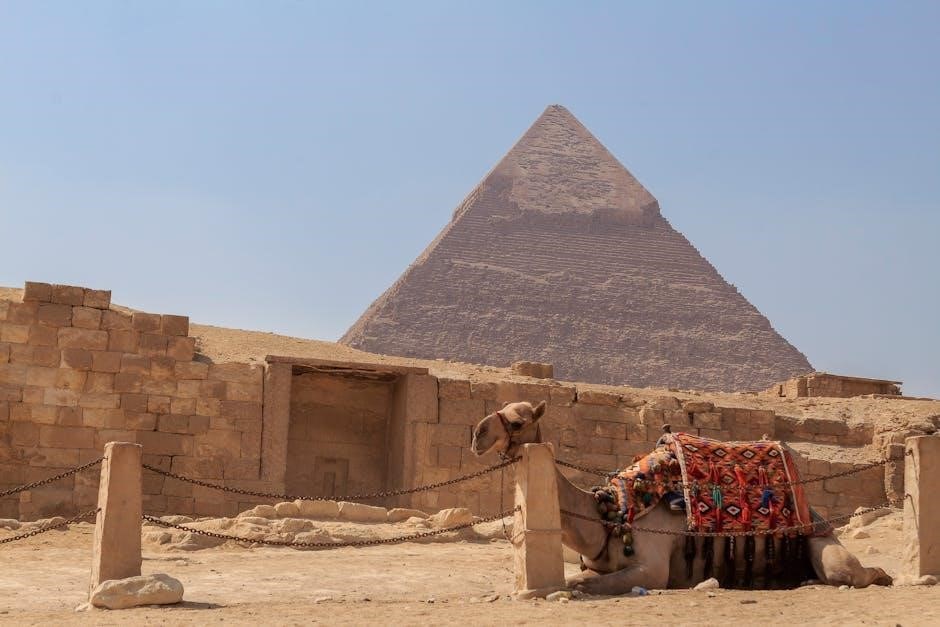
Offsetting techniques, while aesthetically pleasing, can weaken the build if not executed correctly. Regularly check for wobbles during construction and address them immediately. Base reinforcement is critical; a solid foundation prevents shifting. Consider using LEGO Technic elements for added support. Patience and careful brick placement are essential for a robust pyramid.
Finding Missing or Damaged Pieces
Addressing incomplete sets! Discovering missing or damaged pieces is common. First, double-check the inventory list against your remaining bricks – meticulous sorting saves time. LEGO’s Pick a Brick service offers individual component replacement, though availability varies. Online LEGO marketplaces (BrickLink, eBay) are excellent resources for sourcing specific parts.
For damaged bricks, assess the impact on structural integrity. Minor cosmetic flaws are acceptable, but compromised connectors necessitate replacement. LEGO Customer Service may provide replacements for defective parts, especially with newer sets. Document missing pieces with photos and part numbers for efficient ordering.
Displaying Your Completed Pyramid
Showcasing your architectural achievement! A stable, level surface is crucial for displaying your LEGO Pyramid. Consider a custom-built baseplate for enhanced presentation and protection. Creating a diorama with surrounding LEGO elements – desert landscapes, the Nile River, miniature figures – adds context and visual appeal.
Lighting dramatically enhances the pyramid’s texture and form. Subtle spotlights or LED strips integrated into the base create a captivating effect. Protect your model from dust and direct sunlight. A clear display case preserves its condition and allows for unobstructed viewing.
Creating a Diorama Setting
Expand the narrative! A diorama breathes life into your LEGO Pyramid. Utilize tan and dark tan bricks to construct a realistic desert landscape, incorporating dunes and rocky outcrops. The Nile River can be represented with blue baseplates and transparent bricks, adding a vital element of ancient Egyptian life.
Populate the scene with LEGO minifigures – pharaohs, workers, priests, and travelers – to depict daily life. Include miniature palm trees and ancient Egyptian structures like obelisks and temples. Consider adding LEGO animals like camels and crocodiles for added authenticity. A well-planned diorama transforms your pyramid into a captivating historical scene.
Lighting and Presentation Ideas
Illuminate the wonder! Enhance your LEGO Pyramid’s grandeur with strategic lighting. LED light strips placed beneath the base create a subtle glow, highlighting the pyramid’s form. Internal lighting within the chambers adds depth and mystery, simulating torchlight. Consider using warm white LEDs to mimic the desert sun.
For presentation, a custom-built display stand elevates the pyramid, making it a focal point. A dark-colored baseplate provides contrast. Incorporate a descriptive plaque detailing the pyramid’s history and LEGO build. Experiment with shadows and angles to create a dramatic effect, showcasing your building skills and the pyramid’s majestic presence.
Alternative Building Ideas and MOCs
Beyond the instructions! Unleash your creativity with alternative builds. Explore a modular pyramid design, allowing for disassembly and reconstruction of different sections. Create a scaled-down version focusing on interior details, or a larger, more elaborate model with intricate carvings. MOCs (My Own Creations) can depict the pyramid during construction, showcasing workers and ramps.
Expand your Egyptian world by building surrounding structures like the Sphinx, temples, and obelisks. Integrate LEGO City elements to create a bustling ancient settlement. Experiment with different brick colors and textures to represent varying stone types. Share your MOCs online and inspire other LEGO enthusiasts!
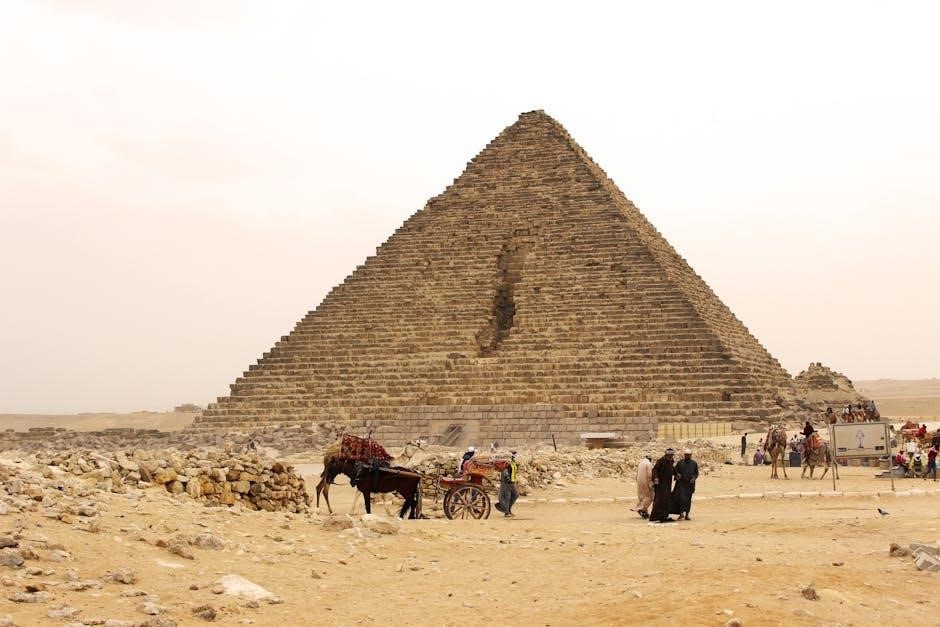
Customizing the Pyramid Design
Personalize your masterpiece! Modify the exterior by experimenting with different brick patterns to simulate weathered stone or varying construction phases. Add details like hieroglyphs using tiles or printed bricks. Change the pyramid’s angle for a unique aesthetic, though stability must be considered. Incorporate lighting – LEDs can illuminate interior chambers or highlight exterior features.
Alter the scale by adding or removing layers. Introduce color variations to represent different types of limestone. Design a removable section to reveal the inner chambers and passageways. Consider building a damaged or partially excavated pyramid for a more realistic look. Document your changes and share your custom design!
Building Additional Egyptian Structures
Expand your LEGO Egypt! Complement the pyramid with surrounding structures like the Sphinx, obelisks, and smaller pyramids. Construct a Nile River using blue tiles and incorporate LEGO boats. Build worker’s villages and temples to create a bustling ancient city scene. Utilize tan and sand-colored bricks to maintain a cohesive aesthetic.
Design mortuary temples and causeways leading to the pyramid. Include miniature figures representing pharaohs, priests, and workers. Create a detailed baseplate landscape with palm trees and desert vegetation. Research Egyptian architecture for inspiration and accuracy. Share your expanded LEGO Egypt with fellow builders!
LEGO Pyramid of Giza and Educational Value
Learn through building! Constructing the LEGO Pyramid fosters an understanding of ancient Egyptian history, engineering, and mathematics. The building process demonstrates the scale and complexity of the original structure. Explore concepts like geometry and spatial reasoning while assembling the pyramid’s layers.
Research the historical context of the Great Pyramid and its significance in ancient Egyptian society. Discuss the challenges faced by the builders and the innovative techniques they employed. This LEGO set provides a hands-on learning experience, sparking curiosity and promoting STEM skills. It’s a fun and engaging way to connect with history!
Learning About Ancient Egypt Through LEGO
Discover a civilization! Building the LEGO Pyramid isn’t just about bricks; it’s a gateway to ancient Egypt. Explore the pharaohs, gods, and daily life of this fascinating culture. Research the pyramid’s purpose – a tomb for the pharaoh, a symbol of power, and a testament to their beliefs.
Investigate the construction methods used by the ancient Egyptians, considering the tools and labor involved. Compare the LEGO model to historical depictions and archaeological findings. This hands-on experience enhances learning and encourages further exploration of Egyptian history, mythology, and architecture. It’s a captivating blend of play and education!
STEM Applications in LEGO Building
Unleash your inner engineer! Constructing the LEGO Pyramid powerfully demonstrates STEM principles. Structural integrity is key – understanding weight distribution, balance, and foundational support is crucial for a stable build. Explore geometric concepts through the pyramid’s angles and precise brick placement.
Problem-solving skills are honed when overcoming building challenges, like stability issues or recreating intricate details. The process encourages spatial reasoning and logical thinking. LEGO building fosters creativity while reinforcing mathematical and scientific concepts, making learning engaging and fun. It’s a practical application of theoretical knowledge!
Resources for LEGO Pyramid Builders
Need help or inspiration? The official LEGO website ([https://www.lego.com/](https://www.lego.com/)) provides digital instructions and potential replacement parts. LEGO fan forums, like BrickLink and Eurobricks, are invaluable for sharing tips, troubleshooting, and discovering MOCs (My Own Creations).
YouTube channels dedicated to LEGO building offer detailed tutorials and building techniques. Explore online communities for assistance with piece identification or resolving instruction manual discrepancies. Websites specializing in LEGO parts can help source missing or damaged bricks. Don’t hesitate to connect with fellow builders – collaboration enhances the building experience!
Official LEGO Website and Instructions
Accessing official resources is key! The LEGO website ([https://www.lego.com/](https://www.lego.com/)) is the primary source for digital instruction manuals. Search by set number to download a PDF version, useful for zooming and offline access. These manuals offer a step-by-step guide, detailing each building phase.
LEGO frequently updates instructions to address errors or clarify complex steps. Check for revisions on the website. Beyond the core manual, LEGO Customer Service can assist with lost instructions or missing pieces. Remember to register your set online for potential updates and exclusive content. Utilizing these official channels ensures a smooth building process.
LEGO Fan Forums and Communities
Connect with fellow builders! Online LEGO fan forums, like Eurobricks and Brickset, are invaluable resources. These communities offer building tips, alternative techniques, and solutions to common challenges encountered during the Pyramid’s construction. Share your progress, ask questions, and learn from experienced builders.
Many forums host dedicated threads for specific sets, including the Pyramid of Giza. Discover MOCs (My Own Creations) inspired by ancient Egypt, and gain insights into customizing your model. Platforms like Reddit’s r/lego also provide a space for discussion and inspiration. These communities foster a collaborative spirit, enhancing your building experience.
Troubleshooting Common Issues
Addressing build frustrations! Stability is key; ensure a firm foundation during base construction. If sections feel wobbly, double-check brick connections and consider reinforcing with additional plates. Missing pieces? Utilize LEGO’s customer service – they readily provide replacements.
Instruction manual discrepancies can occur. Compare your build to images online or within the community forums. Piece identification can be tricky; online databases and part lists are helpful. Crashes during digital instructions (if applicable) may require updating software or deleting GUI files as suggested by user reports. Don’t hesitate to seek help!
Piece Identification and Sorting
Organization is paramount! Before commencing, meticulously sort LEGO elements by color and type. This dramatically streamlines the building process, preventing frustrating searches mid-construction. Utilize trays, containers, or zip-lock bags for efficient categorization.

Identifying specific pieces can be challenging. Leverage online LEGO databases like BrickLink, which offer comprehensive part catalogs with detailed images. Familiarize yourself with LEGO’s numbering system for easy reference. Accurate identification prevents using incorrect bricks, ensuring structural integrity and aesthetic accuracy. A well-sorted collection transforms a daunting task into a pleasurable experience!
Instruction Manual Errors and Updates
Be vigilant! LEGO instruction manuals, while generally accurate, can occasionally contain errors – misprinted part callouts or incorrect assembly steps. Online LEGO communities, like fan forums, frequently identify and document these discrepancies. Regularly check these platforms for updates and corrections specific to the Pyramid set.
Digital instructions on the official LEGO website may receive updates addressing identified issues. Compare your physical manual with the digital version. If encountering a problem, search online for solutions or clarifications from fellow builders. Don’t hesitate to adapt – sometimes a slight modification resolves the issue, ensuring a successful build!